Mpox
Based on the information about mpox in Delaware available at this time, the risk to the public appears low.
Learn about PFAS in Delaware Public Drinking Water Learn more about this alert.

Based on the information about mpox in Delaware available at this time, the risk to the public appears low.
The current number of identified mpox cases can be found on Centers for Disease Control and Prevention (CDC) webpage. Based on the information about mpox in Delaware available at this time, risk to the public appears low.
At this time, national data suggest that gay, bisexual, and other men who have sex with men make up the majority of cases in the current mpox outbreak. However, anyone, regardless of sexual orientation or gender identity, who has been in close, personal contact with someone who has mpox, is at risk.
Call OIDE: 302-744-4700, Press 6 to reach Office of Infectious Disease Epidemiology during normal business hours (8 a.m.-4:30 p.m. M-F). 24/7 Emergency Contact Number: 1-888-295-5156.
Anyone who is deaf, hard of hearing, Deaf-Blind or speech disabled can contact DPH by dialing 7-1-1 first using specialized devices (i.e. TTY, TeleBraille, voice devices). The 7-1-1 service is free and to learn more about how it works, please visit delawarerelay.com.
E-mail: DPHcall@delaware.gov
Mpox is a viral disease that can be spread between people and certain animals. The mpox virus is a part of the same family of viruses as the virus that causes smallpox.
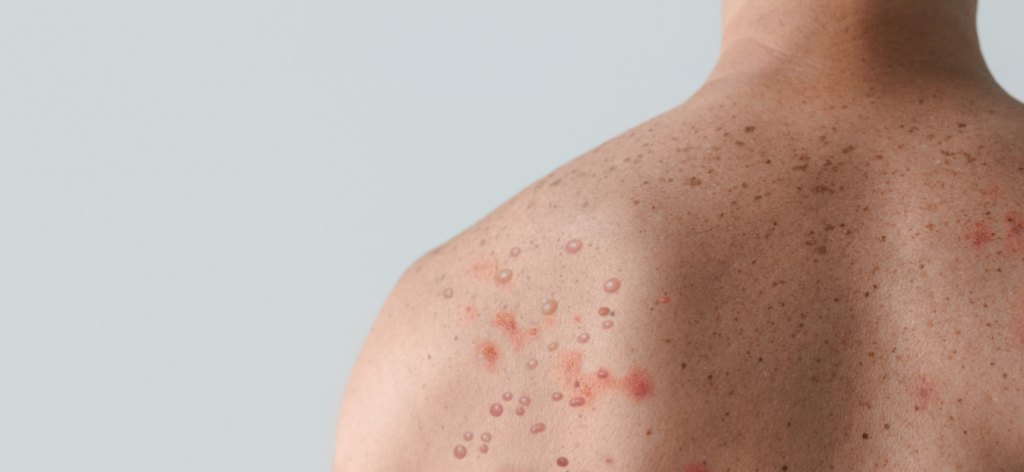
The first human case of mpox was recorded in 1970. Prior to the 2022 outbreak, mpox had been reported in people in several central and western African countries. Previously, almost all mpox cases in people outside of Africa were linked to international travel to countries where the disease commonly occurs or through imported animals. These cases occurred on multiple continents.

Contact with lesions

Body Fluids

Contaminated Materials

Respiratory Droplet
It can spread by touching objects:
Exposure can happen during intimate contact, including:
Having multiple or anonymous sex partners may increase your chances of exposure to mpox.
In humans, the symptoms of mpox are similar to but milder than the symptoms of smallpox. Mpox begins with fever, headache, muscle aches, and exhaustion. The main difference between symptoms of smallpox and mpox is that mpox causes lymph nodes to swell (lymphadenopathy) while smallpox does not. The incubation period (time from infection to symptoms) for mpox is usually seven to 14 days but can range from five to 21 days.
The illness begins with:
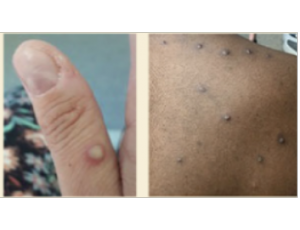
Within one to three days (sometimes longer) after the appearance of fever, the patient develops a rash, often beginning on the face then spreading to other parts of the body. Lesions progress through the following stages before falling off:
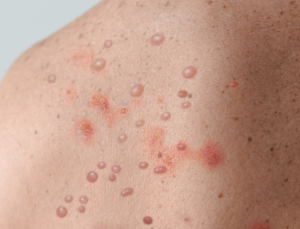

Ask about getting tested for mpox.

When visiting your doctor and to prevent the possible spread.

Smallpox antivirals may be prescribed.

Isolate until the rash has healed and a new layer of skin has formed.
If you have symptoms of mpox, or are concerned you may have been exposed, contact your health care provider to discuss testing. Don’t have a health care provider? Call OIDE: 302-744-4700, Press 6 to reach Office of Infectious Disease Epidemiology during normal business hours (8 a.m.-4:30 p.m. M-F). 24/7 Emergency Contact Number: 1-888-295-5156. If you have symptoms of mpox, talk to your health care provider.
Currently, there is no proven, safe treatment for mpox virus infection. For purposes of controlling a mpox outbreak in the United States, smallpox vaccine, antivirals, and vaccinia immune globulin (VIG) can be used. Learn more about smallpox vaccine, antivirals, and VIG treatments.
If you have symptoms of mpox, talk to your health care provider.
Currently, the Centers for Disease Control and Prevention is not encouraging vaccination against mpox for the broader public or for everyone who is sexually active. Delaware is currently offering vaccination to people at higher risk of exposure, including:
It is important to understand that while there may be many persons in DE who want a mpox vaccine, not everyone in the population needs a mpox vaccine. This is very different from COVID-19. Spread is primarily through direct contact with an infected person and not airborne transmission. Vaccines are not recommended for children. There are things that people in the general public, as well as the LGTBQ+ community can do to protect themselves regardless of their ability to access vaccine such as limiting direct contact with anyone with a concerning rash, limiting the number of intimate partners, talking openly with intimate contacts about recent behaviors, and not sharing bedding, towels and eating or drinking utensils with anyone who does.
Those who received a single dose are recommended to receive a second as soon as possible. Use of JYNNEOS (Smallpox and Monkeypox Vaccine, Live, Nonreplicating) for Preexposure Vaccination of Persons at Risk for Occupational Exposure to Orthopoxviruses: Recommendations of the Advisory Committee on Immunization Practices — United States, 2022 | MMWR (cdc.gov)
As of April 1, 2024 the JYNNEOS vaccine is available commercially and will no longer be offered through DPH clinics due to the federal program discontinuing. If you wish to obtain the JYNNEOS vaccine, reach out to your provider or local pharmacy. JYNNEOS Vaccine Commercial Transition (hhs.gov)
There are number of measures that can be taken to prevent infection with mpox virus:
Proper cleaning of all exposed items is essential following a case of mpox. Poxviruses can survive in linens, clothing and on surfaces. In one study, investigators found live virus 15 days after a patient’s home was left unoccupied. Porous materials (bedding, clothing, etc.) may harbor live virus for longer periods of time than non-porous (plastic, glass, metal) surfaces. People who have recovered from mpox and whose isolation period has ended should disinfect all spaces within the home they had been in contact with. Follow the steps below to minimize risk of infection to others in your home after recovery.

If cleaning and disinfection is done by someone other than the person with mpox, that person should wear, at a minimum, disposable medical gloves and a respirator or well fitting mask. Clothing that fully covers the skin should be worn, and immediately laundered. Wash hands with soap and water or use alcohol based hand sanitizer.

Use an EPA recommended disinfectant. Focus on disinfecting items and surfaces that were in direct contact with the skin. Do not dry dust or sweep as this may spread infectious particles.

Wash sheets, blankets, clothes, and towels.
| Mpox Cases in Delaware | |
|---|---|
| County | Positive Cases |
| New Castle | 32 |
| Kent | 6 |
| Sussex | 10 |
| Total | 48 |
| Age Group of Positive Cases in Delaware | |
|---|---|
| Age | Positive Cases |
| 0-17 | 0 |
| 18-34 | 25 |
| 35-49 | 19 |
| 50-64 | 4 |
| 65+ | 0 |
| Gender Assigned at Birth of Positive Cases in Delaware | |
|---|---|
| Gender | Positive Cases |
| Male | 45 |
| Female | 2 |
| Unknown | 1 |
| Mpox Vaccine Information | |
|---|---|
| Persons having received at least one dose of the vaccine | 1,659 |
| Vaccine vials received by Delaware Public Health | 1,348 |
View more news on news.delaware.gov
 Delaware
 Delaware's Governor
State Directory
Elected Officials
General Assembly
Delaware Courts
State Employees
Cities & Towns
Delaware State Code
State Regulations
Business First Steps
Phone Directory
Locations Directory
Delaware Public Meetings
Voting & Elections
Transparency
Choose Health DE
Tax Center
Personal Income Tax
Privacy Policy
Weather & Travel
Contact State Agencies
Corporations
Franchise Tax
Gross Receipts Tax
Withholding Tax
Guides to Services
Help Center
Mobile Apps
E-mail / Text Alerts
Social Media


Built by the Government Information Center
©MMXXVI Delaware.gov